What Makes a Tahoe Home Truly Unique? Four Properties and the Buyer Lessons Behind Them
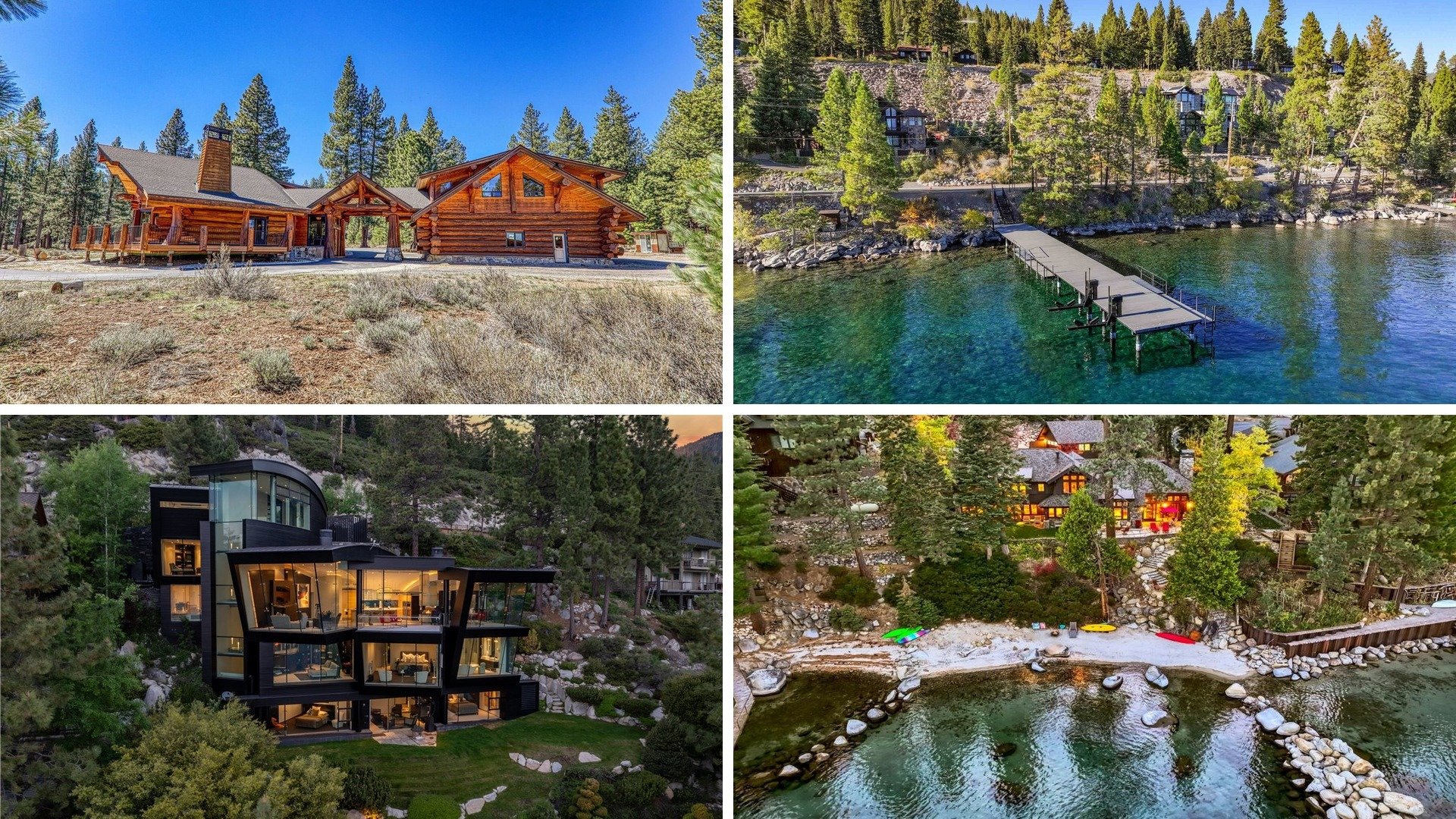
Composite created from approved listing photography. Individual listing credits included with each property section.
Most Tahoe buyers search the same way: beds, baths, price range, lake view. That works fine for a lot of properties. What it won't surface is a home where the interesting part doesn't fit in a filter.
The four properties in this article are interesting for four different reasons. One is a handcrafted log compound on horse-zoned acreage in Truckee: off-grid solar, three permitted structures, a private road, and more due-diligence questions per acre than most buyers are used to. One is a split-lakefront estate in a three-home gated community on the North Shore, where the setting is panoramic and the ownership documents deserve careful reading. One is a steel-frame contemporary lakefront in Crystal Bay, where the construction type alone is reason to bring in a structural engineer. And one is a West Shore cove property in Rubicon Bay, where the shoreline description is compelling and the verification process hasn't finished yet.
These aren't here because they're the most photographed or the most expensive. They're here because each one raises a question worth understanding before price becomes the only conversation. The properties may change. The buyer lessons don't.
Buying Acreage and a Multi-Structure Property in Truckee
Current example: 12804 Quail Ln, Truckee
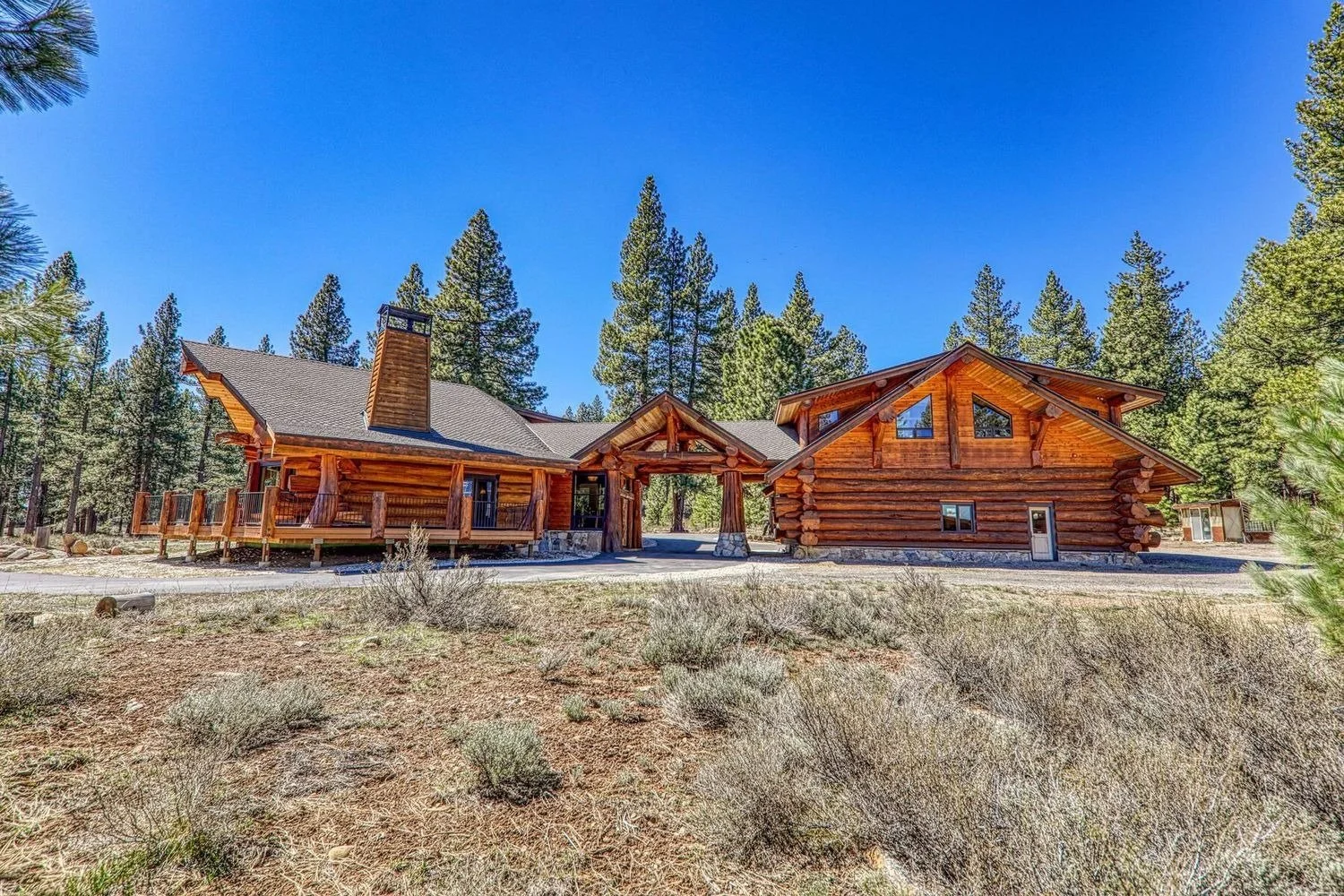
Photo courtesy of Chris Beck. Listing courtesy of Sarah Cain and Christy Morrison, Home and Slate Real Estate.
Not every interesting Tahoe property has a lake view. Some of the best don't come close.
12804 Quail Ln in Truckee sits on approximately 5.36 acres, per the listing. It's horse-zoned, with trail access and three permitted structures: a main house, an ADU, and a studio. The construction is handcrafted log, Western Red Cedar, hand-hewn, no chinking. A builder attribution appears in the public remarks and is pending confirmation from the listing agent. Off-grid solar. No HOA. And a private road. It sounds like privacy until you look at what a private road actually requires.
Square footage across the property is approximately 4,906, per the listing, with the exact allocation among structures requiring verification. Multi-structure properties often carry square footage ambiguities in the MLS total. This one is worth checking specifically.
What buyers should understand about this type of property:
When you're buying a compound instead of a single home, you're really buying multiple insurance questions, multiple financing questions, and multiple maintenance budgets rolled into one price. Each structure needs to be understood separately: what it's insured for, how a lender characterizes it, what it costs to run, and what happens at resale. The total square footage is one number. What you're actually taking on is several.
Horse zoning means the land and zoning support equestrian use. It doesn't mean horse facilities are in place, permitted, or operational. Confirm what's actually there before assuming the listing description and the county record say the same thing.
Off-grid solar is a feature worth understanding before it becomes a surprise. Ask what the system covers, how old the equipment is, what repairs and replacement cost, and how it affects financing eligibility and insurance premium. Lenders and insurers treat off-grid properties differently, and the range of answers is wider than most buyers expect.
Private roads at Tahoe and in Truckee are common. The maintenance agreements behind them are not uniform. Some are well-documented. Some are informal arrangements that work fine right up until something needs fixing. Review the private road disclosure carefully and understand who pays, how decisions get made, and what the obligation actually looks like before the setting closes the deal.
5.36 acres is a number. How much of it is level, how much is forested and steep, how much falls within setbacks, and how it relates to county coverage limits are the questions that tell you what you actually have. Walk the property or review a site map before acreage becomes your reason to buy.
Kenny's Local Take
This kind of property doesn't compete on ski access or lake proximity. It competes on land, construction character, and self-sufficiency, and it tends to sit a little longer because it needs a specific buyer. That's not a red flag. It's just a filter. The right buyer for a place like this already knows why the square footage total doesn't tell the whole story.
Listing courtesy of Sarah Cain and Christy Morrison, Home and Slate Real Estate. Kenny Rutledge is not the listing agent. Information deemed reliable, not guaranteed.
Split Lakefront Versus Direct Lakefront
Current example: 200 Rim Dr, Tahoe Vista
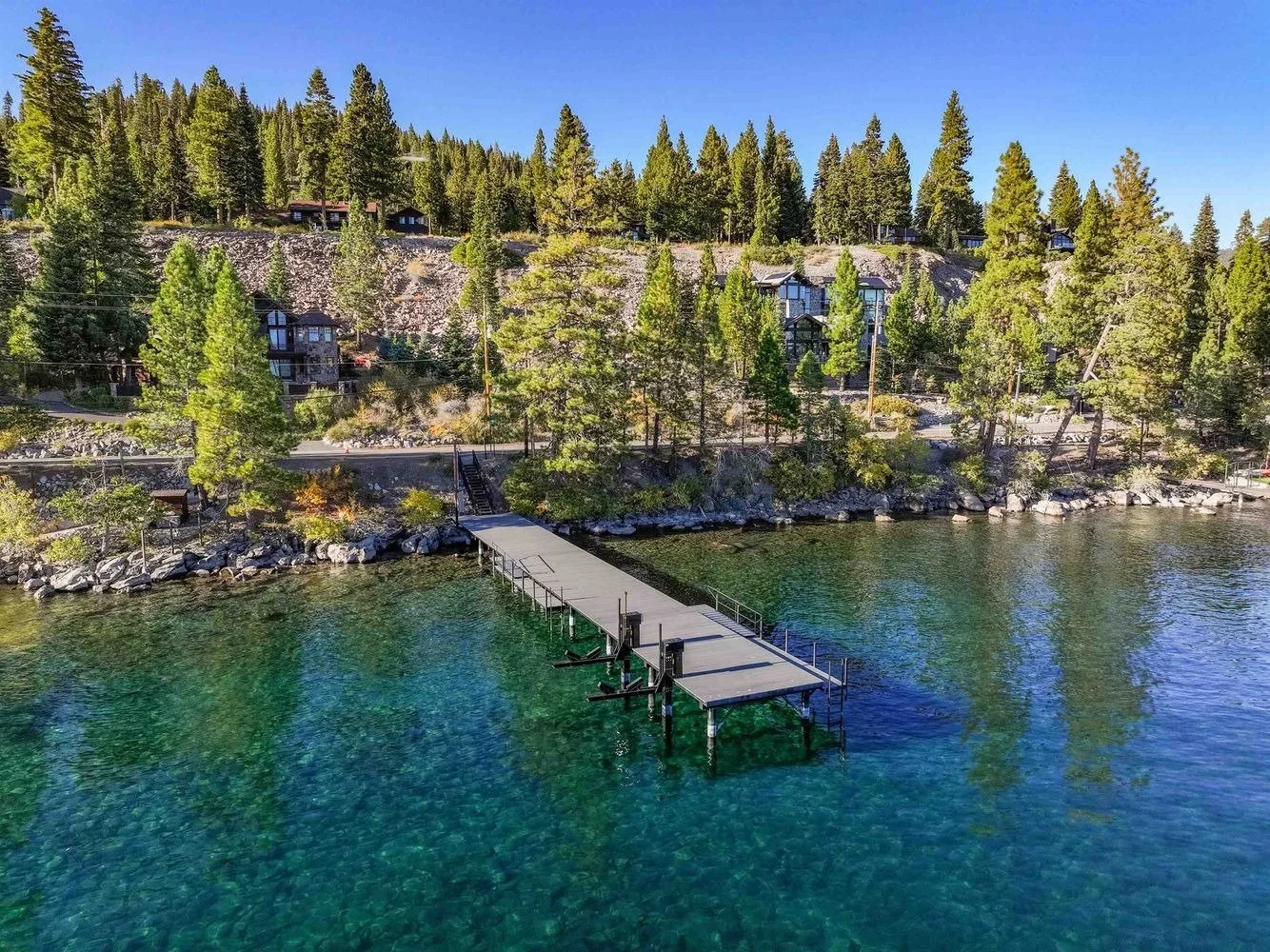
Listing courtesy of Karen Degney, Sierra Sotheby’s International Realty. Photographer credit to be added if known.
"Split lakefront" is one of those real estate terms that sounds self-explanatory until you try to explain it.
Direct lakefront means the parcel touches the lake. Split lakefront means the lot is separated from the lake by a road. On the North Shore, that's typically North Lake Boulevard, with access rights on the other side. In practice, the view and the lifestyle can be remarkably close. The ownership structure, the insurance picture, and the due-diligence checklist are not.
200 Rim Dr in Tahoe Vista isn't a standard split-lakefront story. The property sits within a gated community of three homes, on approximately 10.7 acres per the listing. The setting includes two layers of gating (to the subdivision and to the home), both confirmed in MLS feature fields. Steel-beam construction is confirmed in the MLS construction field. Views are panoramic: lake, mountains, ski resorts, all confirmed in MLS fields. There's a three-car garage with boat storage and RV parking. Shared pier and buoy access are confirmed in MLS Waterfront Amenities fields.
This is a different scale of property than most North Shore buyers are shopping.
What buyers should understand about this type of property:
Split lakefront is not a uniform category. Some split-lakefront properties have deeded beach access across the road, fenced and maintained as their own. Others share pier access with neighboring homes. Others hold a license or easement that reads like ownership on paper but operates differently in practice. Know what you're actually receiving before the price tag shapes your expectations.
When a small gated community shares infrastructure (a gate, a road, a pier), buyers should ask whether formal or informal maintenance and cost-sharing obligations exist. This property shows no formal HOA in the MLS field, but that's worth confirming with the listing agent rather than treating as the full answer.
TRPA, the Tahoe Regional Planning Agency, governs land use, coverage limits, and development on Lake Tahoe parcels. Approximately 10.7 acres doesn't tell you how much falls under TRPA coverage limits, how much is steeply sloped, or how topography affects what a future owner can actually do with the land. On a large lakefront parcel, usable acreage and total acreage are always two separate conversations.
On pier rights: shared pier, permitted pier, deeded pier, and privately owned pier are different things with different obligations and different documents. If pier access is central to why a property works for you, get those documents before the offer goes in.
Kenny's Local Take
North Shore split-lakefront properties sit in a pricing tier that catches buyers off guard, usually because they're comparing only to direct lakefront without accounting for what else is there. The better ones offer privacy, scale, and panoramic views that direct lakefront at the same price often can't match, because the land is there, the infrastructure is there, and the setting is there, just configured differently. The access documents are always the real question. Get them early.
Listing courtesy of Karen Degney, Sierra Sotheby's International Realty. Kenny Rutledge is not the listing agent. Information deemed reliable, not guaranteed.
How to Evaluate Architect-Designed and Steel-Constructed Tahoe Homes
Current example: 580 Gonowabie Rd, Crystal Bay
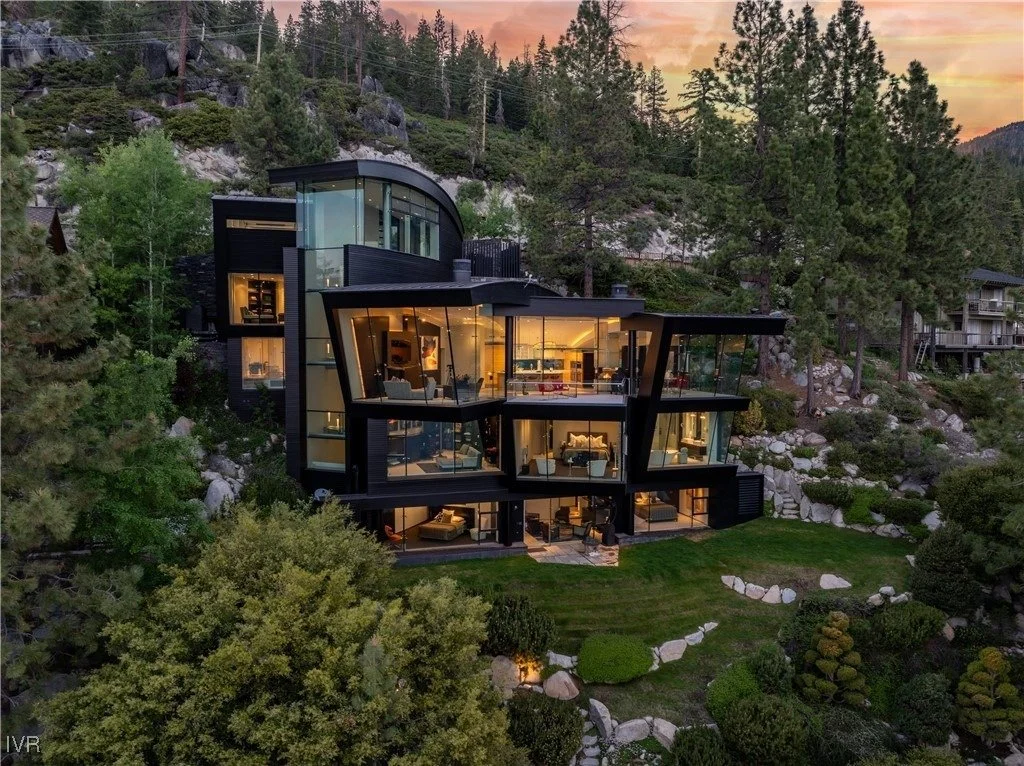
Listing courtesy of Breck Overall, Sierra Sotheby’s International Realty. Photographer credit to be added if known.
Almost everything built around Tahoe is wood-frame. 580 Gonowabie Rd is not.
Steel construction at Tahoe is uncommon enough that most buyers don't have a clear mental model for what it actually means: for maintenance, for insurance, for inspection, for resale. It shows up in the listing and reads either impressive or vaguely unfamiliar depending on who's looking at it. The better approach is to understand what it involves before it becomes a selling point you're not equipped to evaluate.
580 Gonowabie Rd in Crystal Bay is a contemporary lakefront property with steel construction confirmed in the MLS construction field. An elevator is confirmed in the MLS feature field. The waterfront amenities include a pier and boat lift, both confirmed in MLS fields, along with buoy access. Built in 2008, contemporary architecture per the MLS, with a wine room, steam shower, multiple gas fireplaces, and air conditioning, all confirmed in MLS feature fields. Lake and panoramic views are confirmed.
One thing worth knowing at this scale: some details appear in the public remarks and some are confirmed in MLS feature fields. For a property like this, knowing which is which matters. It's not automatically a problem. It is a reason to verify.
What buyers should investigate before assuming any steel-frame lakefront is a known quantity:
What structural-engineering documentation is available? A steel-frame build should have engineering records. Ask for them specifically and have them reviewed by a qualified inspector or structural engineer before closing.
How does the structure perform thermally in Tahoe's temperature range? Tahoe sees real seasonal swings. Insulation approach and thermal performance in a non-standard construction type deserve evaluation. The answers won't be the same as for a wood-frame build.
What fire-resistant assemblies are used, and how are they documented? Steel construction and wood framing have different fire-behavior profiles. Understand what the assemblies actually are before drawing conclusions in either direction.
Is the property insurable, and at what premium? Non-standard construction at a lakefront location can affect coverage availability and cost in ways that differ from standard expectations. Confirm availability and premium range before assuming.
What specialized maintenance does a steel-frame structure require? Expect different inspection schedules, potential oxidation checks, and specific repair procedures. Understand the ongoing maintenance profile and cost range before closing.
What are the replacement costs for steel structural elements? A specialized build has a different replacement cost profile than a conventional one. This matters for insurance coverage amounts and long-term financial planning.
What does elevator ownership mean for ongoing service and inspection? Elevators require permitted inspection and regular service. Ask for the current inspection record and service agreement, and factor the cost into the operating budget.
On waterfront permits and rights: pier, boat lift, and buoy access are confirmed in MLS fields. The specific terms (permit type, transferability, maintenance responsibilities) should be verified in writing before closing.
On architect attribution: when public remarks name a specific architect, verify that independently. Ask the listing agent for documentation. For a property where design pedigree matters to your decision, the listing copy alone isn't sufficient.
Kenny's Local Take
The buyers this kind of property attracts are usually drawn to it because it looks intentionally engineered in a way most Tahoe homes don't. That instinct can be right. But "engineered" is a question, not a conclusion. Get the documentation, bring in a qualified structural engineer and inspector, and understand what the construction type actually means for insurance, maintenance, and resale before the architecture and the water view close the conversation for you.
Listing courtesy of Breck Overall, Sierra Sotheby's International Realty. Kenny Rutledge is not the listing agent. Information deemed reliable, not guaranteed.
Why Shoreline Configuration Matters on Tahoe's West Shore
Current example: 8747 Lakeside Dr, Rubicon Bay
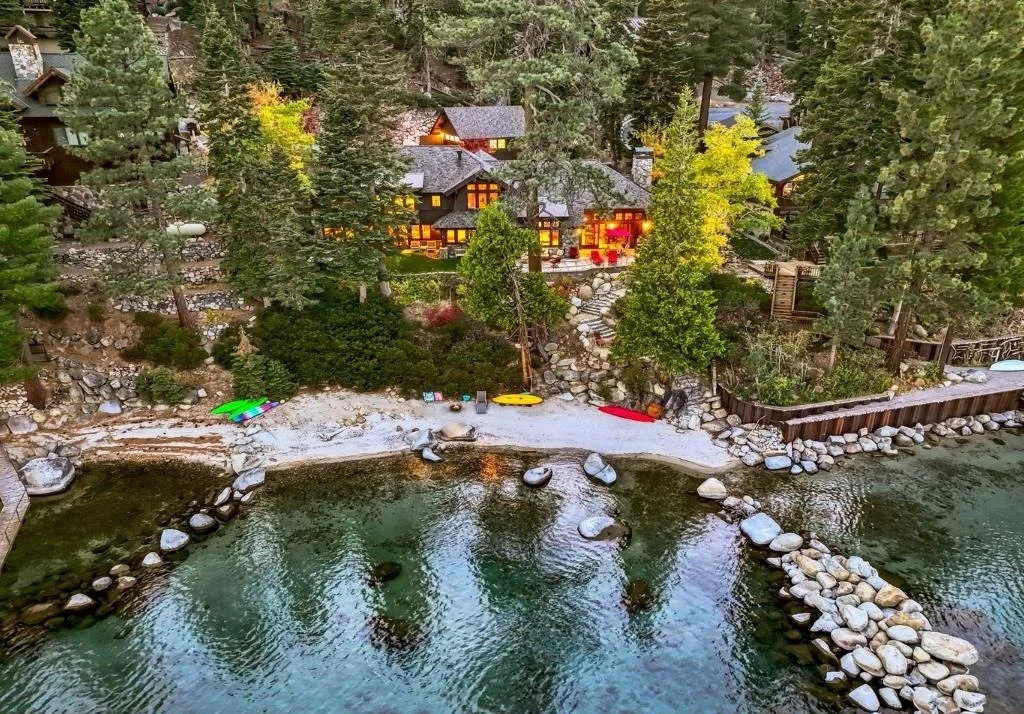
Listing courtesy of Jamison Blair, Compass. Credit Team Blair Tahoe / Compass and photographer if known.
Two Tahoe lakefront addresses can sit a mile apart and feel like completely different properties once you're actually at the water. Angle of exposure, shape of the shoreline, depth at the water's edge: these things change what ownership feels like in ways a price-per-square-foot comparison won't capture.
A sandy, sheltered beach in a cove and a rocky shoreline exposed to afternoon wind and open-water chop are not the same experience. One invites swimming and paddleboarding in conditions that push the other off the water. It's a practical distinction worth making before the photos make it for you.
8747 Lakeside Dr in Rubicon Bay is a custom mountain-lodge build from 2008. The listing describes a sandy beach in a cove naturally sheltered by rock jetties. That description is per the listing, from public remarks, and the beach ownership type and shoreline characterization require confirmation from the listing agent before any specific rights language applies. Fir-beam vaulted ceilings and walnut floors are noted in the public remarks, per the listing.
The MLS Waterfront Amenities field lists buoy and buoy permitted. Public remarks reference buoy access. Exact count, current permit status, installation status, and transferability to a new owner are pending confirmation. Optional membership in the Rubicon Tahoe Owners HOA is referenced in the public remarks, per the listing, and described as adding shared pier access and water sports amenities. What it costs, what it covers in full, and how a buyer opts in or out require confirmation from the listing agent.
What buyers should understand about this type of property:
Sandy, rocky, open, and protected shorelines create genuinely different ownership experiences. A sheltered cove with a sandy beach means calmer swimming conditions, easier paddleboard and kayak launching, and a quieter wind and noise profile than open shoreline. Before comparing two lakefront properties on price alone, understand what the water actually looks and feels like at each address.
How buoy permits work matters. Buoy access at Lake Tahoe is regulated. Current permit status, installation status, and transferability to a new owner are three separate questions. Confirm all three in writing before closing.
Optional HOA membership is not the same as no HOA. If the HOA controls meaningful amenities (a shared pier, storage, water-sports access), opting out may mean opting out of the most practical lake-access features the property's location makes possible. Understand what optional membership adds before deciding whether it matters to you.
The difference between association amenities and deeded private rights is important and commonly conflated. A shared association pier is not the property's private pier. Beach access through HOA membership is not the same as deeded beach ownership. These distinctions affect what you own versus what you share, and that shows up in both the documents and in daily use.
Rubicon Bay is one of the quieter, more private stretches of the West Shore. The tradeoff is distance from Tahoe City, South Lake Tahoe, and the highway. The access road is a two-lane West Shore road that moves slowly in summer and requires attention in winter. Make at least one trip outside peak season before deciding the setting works for how you actually plan to use the property.
Kenny's Local Take
The West Shore attracts buyers who want water quality and privacy and are willing to trade some convenience for both. Rubicon Bay is about as private as the West Shore gets without going off-road entirely. Whether the cove and beach description in this listing holds up under verification (beach ownership type, buoy permits, HOA terms) is exactly what a buyer should sort out before the beach photo does all the deciding. Those are answerable questions. Get the documents and answer them.
Listing courtesy of Jamison Blair, Compass. Kenny Rutledge is not the listing agent. Information deemed reliable, not guaranteed.
What Buyers Should Verify Before Falling for the Photos
These four properties are interesting for different reasons. They have one thing in common: the features that make each of them worth a second look are also the ones most likely to require more than a quick read of the listing.
This applies to any Tahoe property where the appeal goes beyond bedroom count and lake view.
Property boundaries and square footage. Get a current survey. MLS lot-size ranges are starting points, not conclusions. For multi-structure properties, verify the square footage allocation among each building separately. MLS totals often don't break it down, and the number can mislead.
Permit history. Ask for permits on every structure, addition, and improvement. Unpermitted work is common enough in Tahoe and Truckee that this should be an early conversation, not something left for inspection day.
Private roads. A private road disclosure is the beginning of the question, not the answer. Ask for the maintenance agreement. Understand who pays, how decisions get made, and what happens when costs come up.
Shared maintenance agreements. When two or more properties share a gate, road, driveway, or pier, ask whether formal or informal cost-sharing obligations exist and request the governing documents.
HOA participation, including optional HOAs. Ask for current dues, full coverage details, and the governing documents. "HOA: N" in an MLS field doesn't close the question when shared amenities are central to the listing's appeal. For optional HOAs, understand what membership adds and what opting out actually means in practice.
Pier rights, buoy permits, and boat-lift rights. Is the pier private, shared, permitted, licensed, or association-based? Are buoy permits current, installed, and transferable? Who handles the boat lift, and what's its maintenance status? These are separate questions with separate answers.
Beach ownership and access. Deeded, permitted, licensed, or HOA-based beach access each carries a different legal character and a different risk profile. Know which one you have before you close.
TRPA coverage and usable acreage. For any large Tahoe parcel, ask what TRPA allowable coverage applies and how much of the acreage is actually usable. Total acreage and usable acreage are not the same number.
Utilities and off-grid systems. For properties with off-grid solar, well water, or septic, verify current system status, capacity, equipment age, maintenance history, and how each one affects financing eligibility and insurance.
Insurance availability and premium. For non-standard construction types (steel frame, log construction, unconventional materials), confirm insurance availability and expected premium before working from assumptions.
Architecture and builder attribution. When a listing names an architect or builder, verify it independently. Ask the listing agent for documentation. For a property where design pedigree is meaningful to your decision, the public remarks aren't enough.
Listing-photo claims versus documented rights. A pier in the photos isn't automatically deeded to the lot. A beach isn't automatically private. A view isn't guaranteed to stay unobstructed. Photos show what the property looks like. Documents show what you own.
Unique Tahoe Homes Usually Come With Unique Questions
The more interesting a Tahoe property is, the more questions it tends to come with. That's not a reason to walk away. It's a reason to show up prepared.
A compound with off-grid solar on horse-zoned acreage in Truckee is worth understanding before the setting closes the deal. A split-lakefront estate in a three-home gated community is worth understanding before the views do the selling. A steel-frame contemporary on a Crystal Bay lakefront is worth understanding before the architecture ends the conversation. A West Shore cove property is worth understanding before the beach photo does all the deciding.
If one of these homes caught your attention, or your own search has started raising questions you're not sure how to answer, reach out. Understanding what you're actually considering before the photos do the talking is the whole point.
Kenny Rutledge
Broker Associate at COMPASS Realty
CA & NV Tahoe Specialist
Direct line: (530) 906-3880
Kenny@KennyKnowsTahoe.com
KennyKnowsTahoe.com
Listing information deemed reliable, not guaranteed, and subject to change. Kenny Rutledge is not the listing agent for any property referenced in this article. Contact the listing agent for current status and property-specific information.